
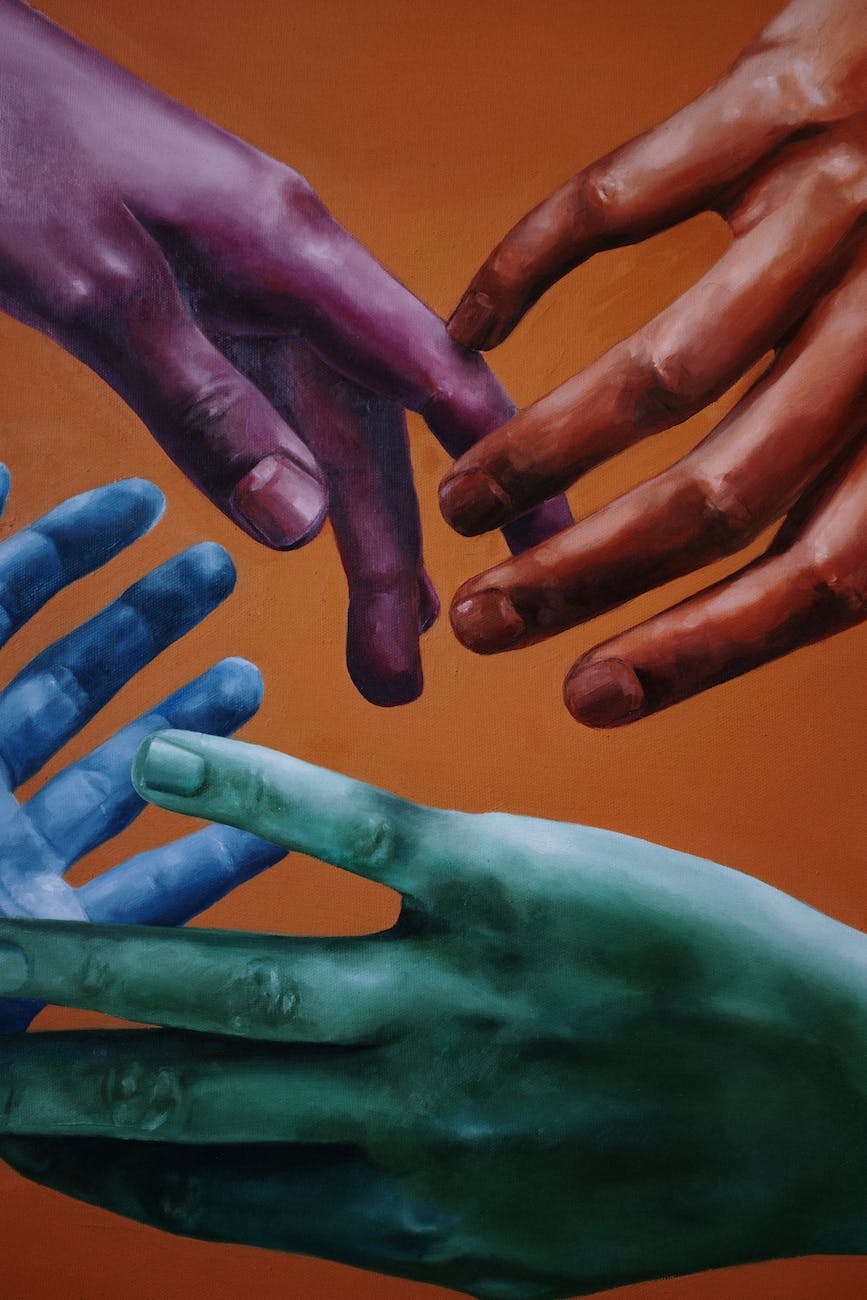
The words “Nectar of the Collective” came to me as I found myself nuzzled back into the folds of a new yoga class last month. Unlike many who stopped or went back to an in person class as soon as they could, I took refuge in my attic during and after the thick of the pandemic. Solo flight for me provided a nest of familiarity and an ease that one can only have with no other eyes and ears. Yet the reintroduction of others in a class setting is immeasurable. There of course is the obvious; in person conversation, a teacher offering their beautiful persona, an adjustment, and the buzz of the beautiful syncing OHM. What escapes our limited perspectives is the energy that a group of people create together. This is a sweet nectar that is borne out of human contact. According to Pubmed, “…there is indeed an energy system that exists within and surrounding the human body and affects both physical and emotional health”. When we had the absence of this during the height of the pandemic, the need for it was definitely becoming a silent scream for connection. This need is universal. Ubantu is an African tribal philosophy about human connectedness and says that society, not a transcendent being, gives humans their humanity. In 1999, Archbishop Desmond Tutu explains Ubantu further. “A person with Ubuntu…has a proper self-assurance that comes from knowing that he or she belongs in a greater whole and is diminished when others are humiliated or diminished. The truth of who we are is that we ARE because we BELONG.” So how can Schadenfreude exist?
Schadenfreude (Noun) : The pleasure derived by someone from another person’s misfortune. It is a term borrowed from German. It is a compound of Schaden (“damage/harm”) and Freude (“joy”) Our one word English equivalent is “epicaricacy” which means rejoicing at the misfortune of others but somehow I get more pleasure saying Schadenfreude. In the 1890s, animal-rights campaigner Frances Power Cobbe wrote a manifesto entitled Schadenfreude, identifying the emotion with the bloodlust of boys torturing cats for fun. Yes, this is a common emotion and we have all experienced this when another trips and falls. I am fascinated at why this exists. Why we would cater to our most base of human emotions (if at all evolved)? Shouldn’t our higher mind want to overcome this quick trigger bloodlust in order to achieve real growth on this planet? According to Dean Burnett, it manifests out of humans being very social animals. As being constantly aware of others; our relationships with them and most importantly, our social status. “…we humans are instinctively aware of the general hierarchy, the pecking order, and our standing within it. We want to be liked, respected, looked up to…Raising your social status feels good, because when we do it, it triggers the pleasure-creating reward pathways in our brain. The inverse is also true; studies have shown that having a low social status is stressful…One way for social status to improve is for someone else to lower theirs. And so, when we see someone else mess up, we can feel a burst of satisfaction as our own status is raised.” This somehow reminds me of being in the worst of the monarchy of England in the 1700s or even defeated Roman gladiators usually being killed by the victorious. Shouldn’t we know better?
I would like to think that with each generation that is born we reach a place where pettiness can be tucked away along with eating without utensils or not wearing any shoes through the streets. It shouldn’t serve our ultimate good to exult over someone else’s misfortune. For now I can’t go to the extreme examples (which for me would be a Donald Trump or a Ghislaine Maxwell). I’d like to overcome that trigger of a faintly distasteful “friend” on social media or even a passing jealousy over someone who seems to be enjoying this ride right now more than me.
I have become friends with a sweet man at work. He came to America from Haiti about ten years ago. Knowing very little English, he seems to have made his way quite well. With his beautiful dimpled smile, he told me recently about the cruelest example of Schadenfreude I have ever heard. According to him, when someone can leave the hard lands of Haiti, it is like leaving hell. And if one is migrating to America, then it’s like they’ve got the golden ticket to Heaven. His beautiful mother that he treasured and looked up to had shared with some neighbors that she was planning to go to America. Word spread fast through the small town and as she was about to have her fourth child before the trip ahead, her life and the life of her baby were ended mysteriously. No details were to be provided but he got enough information to know for certain that it was murder. Murder because why should she and her family be able to escape “hell” when others couldn’t?
I hear snippets of jealous comments here and there from my dear children and they echo things that I have thought and said myself. We are all only human in this realm after all. Yet if we can all remember that cloak of solidarity, that aura of human kindness that warms our many embers then perhaps we can grow that seed into gardens instead of bowing without thought to the ID, our base self that simply reacts without the replacement of kinder thoughts. And maybe one day I can get my head around the wicked of the world and be in the light of Buddha. I wonder if that is possible. Remember though that it is society that gives humans their humanity.
 Life's Rich Pageant